Sunday, June 19, 2011

The Important Story of Vitamin D and Alaskans

Vitamin D. Most of us who live in Alaska don't get enough of it - unless we take adequate supplements and/or get near the equator in the winter. But I am getting ahead of myself. I had the good fortune to meet state legislator Rep. Paul Seaton from Homer recently. His awareness resolution about Vitamin D was passed during this session by the Alaska State Legislature. Seaton wants everyone in Alaska to have adequate levels of Vitamin D as a prevention measure leading to a lower incidence of disease which would then equal better health for all of us. Here is the link to read all about it: http://www.legis.state.ak.us/basis/get_bill_text.asp?hsid=HCR005Z&session=27

We make Vitamin D in our bodies when we expose our skin to the sun as you can see from the graphic below. The sun needs to be at the proper angle, unfettered by clouds. Folks, not only is this one chariot we can't harness, we also can't change our position on the planet.


This simple fact - the necessity for sun exposure - poses a huge problem for us. For most of the year, because of our northern latitude, the sun's rays fall on us at an angle that is far too low to provide adequate ultraviolet B exposure. The angle is wrong for SEVEN months. As a matter of fact, everyone who lives above the 37th parallel is at risk during the winter months. And we are way north of the 37th parallel. In Juneau, we are at the 58th parallel which is not even on this map below; not only that, the rest of Alaska is way north of the 58th parallel. Take a look at the map below to see which parts of the US have adequate sun during the whole year.


Can you see the scope of our problem? And here is another problem that can't be solved. Even though Juneau is in the southern part of Alaska, it is one of the cloudiest places in the entire country - #6, in fact. So even when the angle of the sun is high enough to allow proper exposure, cloud cover often prevents it for those of us who live in the rain forest. (According to weather research, Juneau is cloudy 88% of the year.)

It was disheartening to discover that Vitamin D deficiency is related to all kinds of diseases: cancers of the breast, colon and prostate; rheumatoid arthritis, multiple sclerosis, heart disease, diabetes, periodontal disease, SAD, and more. The long list takes my breath away. Just by living year round in Alaska, we are at risk. Wow. How can this incredible environment not support human health? A traditional diet did, but few eat that way anymore. 

It is a wonder that we are all not falling down, one after the other, from lack of Vitamin D. But I think it happens without our being really aware of it. It happens every time someone is diagnosed with cancer, with MS, with arthritis...  According to Seaton's resolution, our state has "a high incidence of preventable diseases that numerous studies indicate may be correlated with insufficient blood serum levels of Vitamin D."


I tell myself I would be bored silly living in a tropical paradise, but at least I wouldn't have to worry about Vitamin D. Until I find myself lolling about on a beach, I need to remember to take my supplements every day!


Monday, June 13, 2011

Dillingham in Western Alaska

I was in Dillingham in Western Alaska recently for a conference. Like most places in the state, Dillingham can only be reached by air or water. Pen Air flies a SAAB 340 there from Anchorage. The flight attendant hands passengers a package of ear plugs upon boarding. They are called "Softies." I think it's a nice gesture.


The plane carries 30 people and on this flight, every seat was full. I think most of the people were attending the same conference I was attending. It was a little tight, especially for tall people, but the flight isn't even an hour long. It's just loud.


Dillingham is tucked up into the confluence of two rivers, the Nushagak and the Wood, that run out to Bristol Bay. And Bristol Bay is where the largest wild salmon fishery in the world is. When I arrived there over a week ago, people told me about the first king salmon being caught on the beach in a net. They were smacking their lips.


Salmon are the lifeblood of this region. These boats will be going out soon. The value of the wild salmon commercial fishing industry totals about $100 million a year here and anything that threatens it, like the Pebble Mine proposal, has strong opposition. 


I was struck by the contrasts in Dillingham. Right across the dirt street from these containers is an old graveyard.

A sense of eternity does pervade Dillingham, indeed most of Alaska. People have lived here for 10,000 years. And they are still here. That's something. 

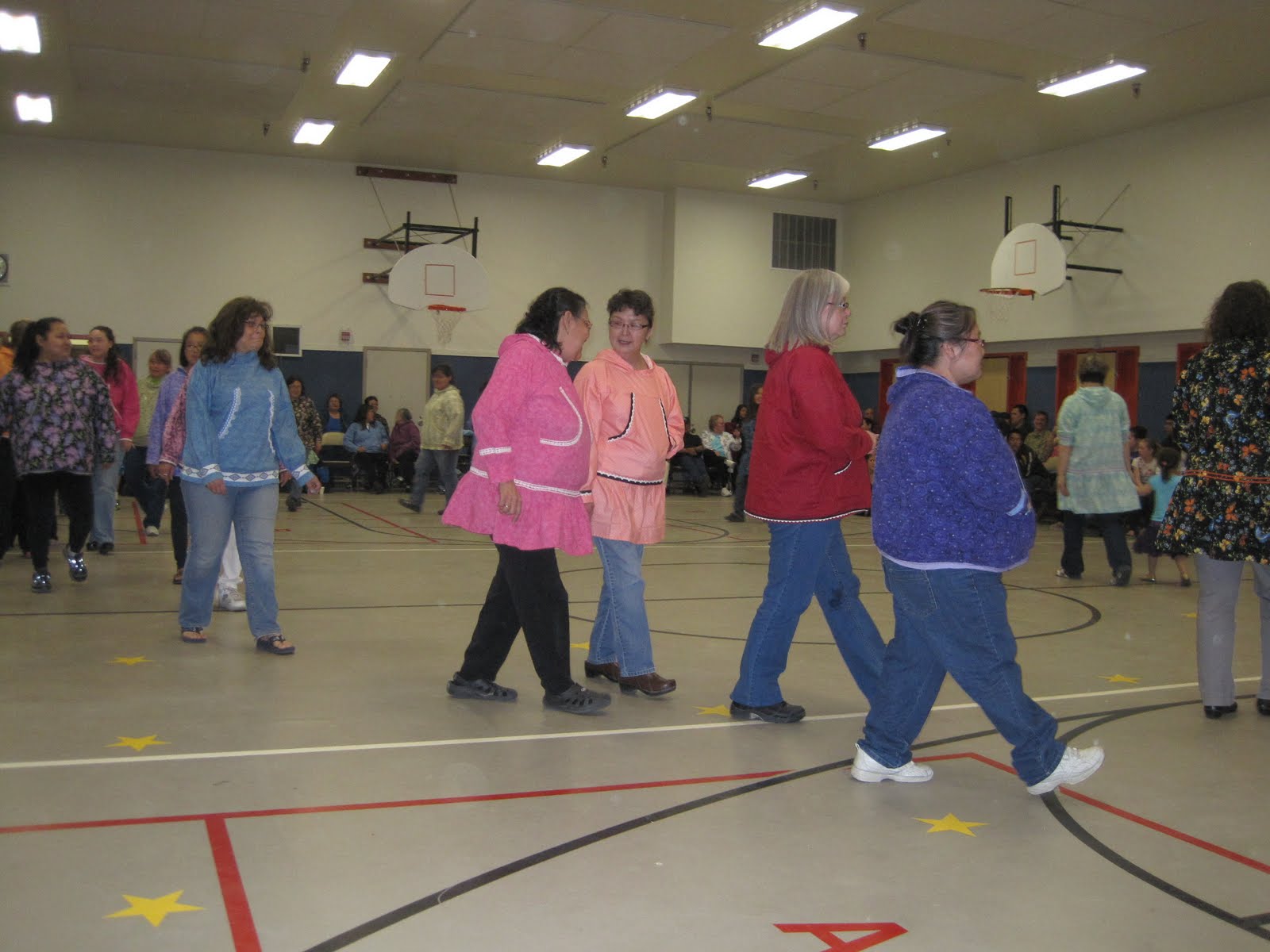
The Rural Providers Conference (sponsored by RuralCAP and the Bristol Bay Native Association) brings all ages together from all over Alaska. During the evenings, we had a Talent Share, a Traditional Foods Potluck, an All Ages Dance. I took the photos below of the Kuspuk Contest during the dance. Although kuspuks are similar, different regions of Alaska may have different pockets or skirts (or no skirts) or trim. Men wear them too but theirs are solid instead of flowered fabric, and have a different name. That night, they gave prizes for most traditional, for most colorful, for family groups. We all clapped loudly for everyone who paraded around the elementary school gym. It made me wish that I had brought my kuspuk. At the hospital in Dillingham, every Friday is Kuspuk Day. 


Before and during every event I attended during this conference, everybody, and I mean EVERYBODY received a ticket for the chance to win a door prize. In fact, women with huge rolls of tickets walked through the groups, making sure that everyone had a ticket, even those who walked in late. The emphasis on inclusivity was so appealing. No one was left out. No one. We all were handed an equal chance to win the door prizes: some small, some big, all unexpected. We all waited breathlessly as they picked the tickets out of the bucket. And then we clapped for the person who won. 

You walk in the door, you get a ticket. Wouldn't it be something if life were like that?


Wednesday, May 11, 2011

Avalanche Watching on a Sunday Afternoon


How many people can sit on their front deck and watch avalanches come down a chute? My neighbor and I did just that on Sunday afternoon. It has been a warm day with lots of sun - which is when the avalanches let loose every spring. When I went outside, my neighbor said she had been hearing them as she worked in her garden. So as we sat on the deck, watching the world go by, we heard one. The sound is like the surf crashing on the Oregon beach. We looked up at Mount Juneau, and sure enough, one was coming down. It looked tiny from where we sat and we figured that it was at least a mile away. I looked it up and Mount Juneau is 3576 feet high. It is the dramatic backdrop for our town as you can see in the photo above. Right now, the top is snow-covered with tracks where the snow has rolled down toward the chute. The mountain has folds and in the inner folds are the chutes.

After we had been watching for awhile and talking about how nice it would be to have binoculars, I realized I had a very good pair in the entry way a few feet from us. We started using them and could really see how the snow gave way to a combination of snow and rocks and then eventually water. The pattern seemed the same for each one. Every few minutes, another one would start in the snow field at the top and then tumble down the steep mountain.


So, as you can see from the photo above, we could watch them go halfway down the mountain, and although we could still hear them roaring, we couldn't see them get to the base of the Mount Juneau. 

The best part of watching avalanches from a deck is that they are far enough away. The excitement of watching an avalanche turns into a very different feeling indeed the closer you come to it. Sometime, when we walk on Basin Road in the spring and hear a roar, we go on hyper alert. But when you can sip Good Earth tea with your neighbor and take turns using the binoculars on a sunny Sunday, it is a very happy feeling.


Thursday, April 21, 2011

Continental or Contiguous?

Quick! Is Alaska part of the North American Continent and thus the continental United States?


Yes, it is! If you look at the map of the North American Continent above, you will see that the United States is in green. Way up north next to Canada is Alaska, in green, still part of the continent. 

So, here's a shout out to all of you shippers and businesses out there: Alaska is part of the "continental United States." Yes, we are. Every Alaskan has had the experience of ordering something through a catalogue or online and found that the shipping rate charged, i.e. the rate for the "continental United States," does not include Alaska. Having embarked on many a geographical conversation with people in other parts of the US about what constitutes a continent, I can tell you that there are many murky ideas out there about basic geography in our part of the world. (OK, I admit it - who knew that Greenland is also part of the North American Continent, but come on - Alaska is obvious.)

OK, now let's look at "contiguous," a beautiful word that I should like to use at least once a day. It means the "adjoining 48 states and the District of Columbia."  The map below is the contiguous United States. Obviously, Alaska and Hawaii are not included because they are not connected geographically to the rest. 


So when shippers say that shipping charges are free for the continental US, that gets our hopes up. And then our hopes are dashed when they say that doesn't include Alaska. (It also makes us wild because geography is a pretty straightforward subject and every US citizen should know where all 50 states are...) However, shippers can be geographically pure and even get back in our good graces if they stipulate "free shipping in the contiguous United States," and then we wouldn't get all excited because we would know exactly who gets free shipping and - sigh - who doesn't.  

Sunday, April 17, 2011

Anchorage Delight

This comes under the category of "you never know what delight will be waiting for you." A colleague and I had just finished presenting a workshop to artists and teachers - always such a pleasure to be with creative people - and emerged after two days to see this on the Delaney Park Strip in Anchorage. Even though we felt tired, we were also curious, and so walked over the still frozen grass and joined in.


Everything about it was irresistible. The color against the sky and the way it billowed and changed and the glimpses of people underneath all propelled us closer.


Even though the breeze was slight, it pulled the yellow nylon out of our fingers. And then as the pressure from underneath grew stronger, it started pulling apart the sections of the huge piece of nylon that were held together by Velcro. Instead of marveling at how it all looked, we went into repair mode and started working together to press the Velcro seams back together. You can see in the picture below how it is ripping apart. Once one seam went, it weakened the other in a chain reaction. A good metaphor for what can happen in a community.


Once we had gotten it back together, I had to get inside to feel it. I was surprised by the amount of pressure it exerted on my head - the flimsy light nylon felt very heavy.


We could have dallied there for a long time, but we had to get to the airport. As we were leaving, I took a photo of the people in the cherry picker far above who were filming it all. By the way, I asked several people what was happening. "Don't know - some art project, I guess," someone said. 


Since our workshop had been on community engagement, seeing this event reminded us that people want to do things together, that real community is built through shared experience, and that all ages having fun with each other is good for everyone, and that the world is full of beauty and delight.


Saturday, April 9, 2011

The Arts In Juneau


We breathe the arts in Juneau. Where else in a town of 32,000 would you find two symphony orchestras, a big band, two opera companies, two professional theaters, a community theater, Tlingit dance groups, more authors and painters than you can shake a stick at, a dance company, an annual weeklong folk music festival, and an annual jazz and classics festival? And there is more. I wonder how it can all happen. Just last weekend, I attended some of the monthly First Friday events - galleries and cafes and shops exhibit photography and paintings and jewelry by local artists and book signings by local authors while the city and state museums hosted new exhibits. The mood was playful and curious and happy. In Holy Trinity Episcopal Church, I want to a reception for the installation of paintings that had been sent away to be cleaned right before the church burned to the ground. Now in the newly rebuilt church, they have been brought back, the only things left - it felt quite miraculous to see the very old paintings, restored and evoking the spirit of the venerable old church.


Afterwards, I walked down the street to witness four actors doing a short play in the display window of The Canvas, a community art studio. It was the first time anyone had ever tried it. And for the most part, it worked - except that the windows kept steaming up. The crowd loved it - art flourishes in an encouraging environment.


Lest you think that Alaska fosters only certain kinds of art, think again. We are very big into stuffed and mounted trophies too. I think we go a long way to welcome personal expression. It makes for a very lively place to live.


Sunday, April 3, 2011

Alaskans Choose Respect


I attended the Alaskans Choose Respect Rally at the Capitol on Thursday, March 31. Usually, I attend political rallies there. This time, it wasn't a political rally. It was instead a cultural rally, a rally to change the culture in our state around domestic violence and sexual abuse. We have extremely high rates of domestic violence and sexual assault in Alaska and from the start, Governor Parnell has made it a priority in his administration.

At the rally, Dr. Walter Soboleff spoke from his wheelchair. One hundred and three years old, a Presbyterian minister and Tlingit Elder, he spoke briefly about how respect has always been a part of Tlingit cultute, not only respect for people but for creatures, land and water. It made me think of the current tragedy playing out in Japan where the water is being poisoned by radiation, and how that is not only disrespectful to the water, but also to the air, the fish, and the people affected by it.


His grandson, Sgt. Chris Burke, also spoke from the perspective of his work as a 15-year veteran as a Juneau Police Officer and, one would assume, many calls of distress. I liked what he said about the police not causing trouble, but "creating peace."

Although it was cold and wet, the group marched down Main Street to Marine Park to finish the rally. Lots of umbrellas out that day.


Although Alaskans are a diverse group of people, ethnically and politically and every other way, I'd venture to say that we share an appreciation, maybe even reverence for this land and for the animals, and now we have the potential to share something else: feelings of respect that could become reverence for all that surrounds us.